Animal and Pet Health Care and Safety
Guide to caring for cats and dogs, deterring deer in the yard and garden, attracting wild birds, caring for your horse, increasing the life span of your rabbit and raising chickens. Information on critters from the house to the barnyard.
Cats can be masters at disguising illness. Learn to recognize illness in its initial stages. A cat communicates both vocally and with its tail. Find out what a swishing tail means in the Cat Tails article.
Many dogs suffer from allergies often brought on by the ingredients in their food. Learn the symptoms of bloat in dogs and why it should be considered a true emergency. A guide to what plants, foods, and household items can be toxic to your pet.
Ways to deer proof your yard and garden using an integrated approach. Learn which plants are more deer resistant and some tips on attracting them away from your prized petunias.
The wild bird section has tips on feeding and attracting blue birds and hummingbirds. Build a blue bird house and learn how to start your own bluebird trail. Attracting hummingbirds is easy. A clean feeder and fresh nectar will keep them humming around your yard.
Explore the differences between the more popular poultry breeds and learn which chickens are better suited as layers than fryers. Caring for chicks isn't difficult if you follow some essential guidelines.
Your rabbit can live a longer life given good basic care. It doesn't require a lot of room to raise a rabbit, but they do have specific feeding requirements and are sensitive to temperature fluctuations.
Help stop the spread of invasive weeds. Guides to identify weeds and methods of controling noxious weeds.
Calculate how much fence you will need to surround a given area using handy reference guides.
Your Pet's First Aid Kit




(formerly the Feed and Farm web site)
I am in favor of animal rights as well as human rights. That is the way of a whole human being. ~ Abraham Lincoln

Web Site Design by S&J Enterprises - Homestead Website Design
Loading...
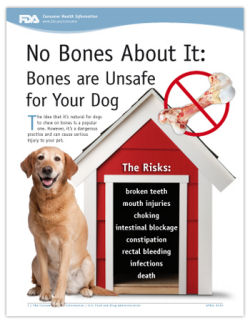
FDA says NO! to give a dog a bone ....
graphic courtesy of the FDA
We all hope our pets never get injured, but minor injuries seem as much a part of having a cat or dog as they do when you have children! It's always good to be prepared to deal with pet first aid. For deep cuts, serious injuries and illness consult with your veterinarian.
An old tackle box, sewing kit or tool box make good containers for your first aid kit. Use a garbage bag that you can keep with your kit for large, bulkier items like a blanket or plastic storage bins (like the ones from Rubbermaid) are great if you want to keep everything in one container. There are all sorts of small organizers you can purchase to keep the smaller contents of your kit from rattling around in the bin and make them easy to find.
Seek advice from your Veterinarian on things like how much to dilute Hydrogen Peroxide and the correct dosage to give in the event your pet ingests a poison. Type out these instructions and tape them to the inside of the lid on your kit along with your Vet's phone number.
Items you need for your First Aid Kit for Cats and Dogs
Protect Your Pets in the Summer and help inform others about the dangers of leaving a pet unattended in a vehicle in the hot summer months.